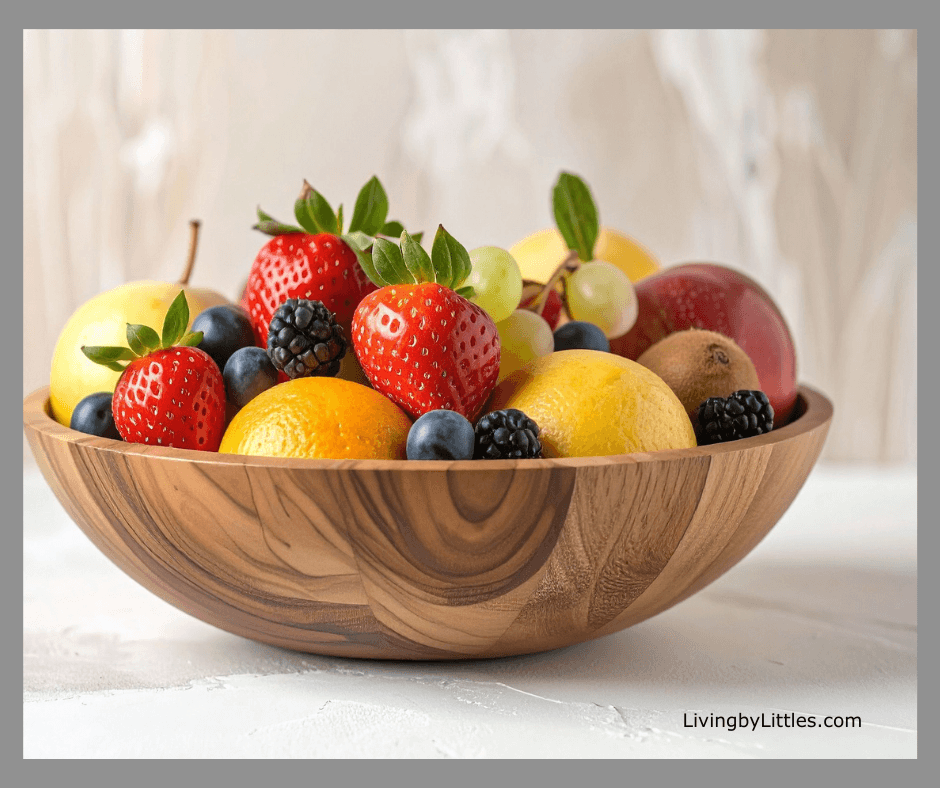
Do you ever pause and wonder whether the fresh produce you’re about to enjoy is truly safe enough to eat?
With new stories emerging daily about someone getting sick from this or that infection linked to fresh produce, you are right to be concerned.
However, by taking just a few simple steps for safer fruits and veges, the risk of infection will be lower, and you can enjoy the summertime goodness with a little more confidence.
Note:
This post contains affiliate links, which means, at no cost to you, I may earn a commission if you make a purchase through these links. Please note that I only recommend products that I believe will add value to my followers.
As an Amazon Associate, I earn from qualifying purchases.
My Story
Fresh salads are a staple of my menu, both at home and when eating out.
However, the recent outbreak of Cyclospora has given me pause.
Not only have the stories raised concerns about the lettuce I eat, but they’ve made me skeptical about every other fruit and vegetable I usually enjoy.
“Will I get sick, will one of my grandkids get sick, how do I even know if I should eat this”?
Instead of ditching all the stuff I usually enjoy, or going down a rabbit hole of worry, I decided to take a few simple steps for safer fruits and veges and then simply go forth and enjoy!
Simple Steps for Safer Fruits and Veges
Buy Local
Reducing transport time and distance reduces the chance of contamination and bacterial growth.
While it may not be as convenient as picking up your fruits and vegetables at the grocery store, summertime offers tons of opportunities to buy local.
Make it a habit to frequent the local farmers’ market and roadside stands.
Some grocery stores even have bins of local produce.
Local means less hands have touched it and the produce probably hasn’t been laying in a bin for days before you buy it.
Limit Quantities
Every time I see an advertisement for a storage method promising to keep produce good for up to two weeks, I stop and wonder; “Why would you want to?”
Although it’s important to store food safely, the longer food is stored, produce included, the higher the chance it will go bad and make you sick.
Most fresh fruits and vegetables can be stored safely for two to five days.
While there are some exceptions; apples, potatoes, squash and onions to name a few, it’s a better practice to limit quantities and buy more frequently.
Keep it Clean!
There’s more to keeping it clean than the process of washing the produce.
Start Clean
Your hands, the counter tops, the cutting boards, and even the utensils you use.
They should all be clean before you start cutting or peeling.
Bacteria from the outside of raw produce can transfer to the inside when it is being cut or peeled.
Washing
It goes without saying that fresh produce needs to be well washed.
However, it’s easy to be in a rush and neglect to do a good enough job.
Take your time, be thorough. Use your clean hands to gently rub whatever you’re washing.
Separate the leaves of greens and make sure to wash and rinse each leaf thoroughly.
When appropriate, use a vegetable brush. (This is usually best on produce that can’t be easily damaged.)
Both rinsing under a faucet and immersing the produce in a bowl of water are effective ways of washing produce.
Washing Methods
Running Water
Under running water, rub fruits and vegetables briskly with your hands to remove dirt and surface microorganisms.
Immersion
Immersing produce is currently my first choice when it comes to washing fruits and vegetables. Somehow, to me, it just feels like they’ve truly been cleaned.
Use a clean bowl and not the kitchen sink. No matter how clean your kitchen sink is, well, it’s still the kitchen sink and there’s bound to be hidden gunk somewhere.
If you want to add white vinegar to your water, this is where that would happen.
If you add vinegar to your water, make sure to rinse well.
Commercial Fruit and Vegetable Washes
I assumed that a commercial fruit and vegetable cleaner would be superior to white vinegar.
In fact, my quest to find the best one was what led to this entire post.
Guess what? The FDA recommends AGAINST using a commercial fruit and vegetable wash.
The reason? Many fruits and vegetables are porous and can absorb the cleaner, possibly making you sick or changing the taste of the fruits and vegetables.
There are mixed reviews on the benefits of adding white vinegar to a bowl of water and immersing the fruits and vegetables.
Here’s the thing. The chances of getting ill from vinegar are slim to none.
So, if using a fruit and vegetable wash provides peace of mind, use a water- vinegar blend. The standard ratio is 3 parts water to 1 part vinegar.
One note: Never ever clean fruits and vegetables with bleach or any kind of detergent. You will simply trade the chance of getting sick from the produce to getting sick from the wash.
Wait to Wash
Resist the temptation to wash your fruits and vegetables when you come home from the store.
Washing produce before storing may promote bacterial growth and speed up spoilage.
Instead, wait to wash it until right before you eat, or prepare, it.
And that’s it, some simple steps for fresher fruits and veges.
If you’re concerned about the safety of your fresh fruits and vegetables, take a few simple steps and go forth and enjoy with confidence.
********************
TAKE ACTION!!!
Find it on Amazon: Vegetable Brush Scrubber
********************